
La desnudez de los árboles
Hace 5 años
Así es, señoras y caballeros. Nuestro orgullo patrio, que está fuera de toda duda, nos llevará a la victoria esta noche en el ancestral combate ritual de Eurovisión. Este año participamos (por mucho que le pese a Televisión Española, a Uribarri y a Rafaela Carrà) con Rodolfo Chiquilicuatre. Ante nuestro magnífico ejemplar ibérico, descendiente directo de Pizarros y Mendozas (y algún tataratío abuelo Cortés, a buen seguro) las huestes de Hunos y Vikingos nada podrán hacer. Así lo demuestra el testimonio que traemos hoy a nuestro humilde cuaderno virtual de bitácora. El tecno-vikingo ya ha caido rendido bajo el ritmo imparable de conquista de nuestro Chiki-Chiki.
Habrá un día
en que todos
al levantar la vista,
veremos una tierra
que ponga libertad.
Hermano, aquí mi mano,
será tuya mi frente,
y tu gesto de siempre
caerá sin levantar
huracanes de miedo
ante la libertad.
Haremos el camino
en un mismo trazado,
uniendo nuestros hombros
para así levantar
a aquellos que cayeron
gritando libertad.
Habrá un día
en que todos
al levantar la vista,
veremos una tierra
que ponga libertad.
Sonarán las campanas
desde los campanarios,
y los campos desiertos
volverán a granar
unas espigas altas
dispuestas para el pan.
Para un pan que en los siglos
nunca fue repartido
entre todos aquellos
que hicieron lo posible
por empujar la historia
hacia la libertad.
Habrá un día
en que todos
al levantar la vista,
veremos una tierra
que ponga libertad.
También será posible
que esa hermosa mañana
ni tú, ni yo, ni el otro
la lleguemos a ver;
pero habrá que forzarla
para que pueda ser.
Que sea como un viento
que arranque los matojos
surgiendo la verdad,
y limpie los caminos
de siglos de destrozos
contra la libertad.
Habrá un día
en que todos
al levantar la vista,
veremos una tierra
que ponga libertad.
Increíble, maravilloso, mágico. Un concierto para soñar.
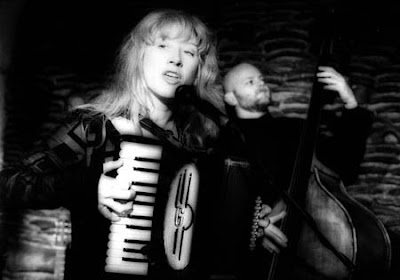
Loreena McKennitt en Málaga, el 16 de julio, en el Teatro Cervantes. Ya os contaré porque, por supuesto, pienso estar allí ;).
Sin duda, un gran fichaje para Cruzcampo, Alhambra, y demás compañías cerveceras ;).
"Cerveza, cerveza...quiero tomar cerveza.
Cerveza, cerveza, quiero tomar cerveza.
Porque ya bastante sufro en la vida,
porque mi amorcito se ha marchado lejos"
Descubre ¡YA! a esta talentosa niña en YouTube . Ver para creer.
El pasado domingo (¡POR FIN!) pude salir con mis dos buenos amigos y compañeros, tan trotalomas como yo (o más aún), Sergio y Alberto. Como buenos Cuervos, nos fuimos a oír más que ver a nuestros amigos los críalos, y la salida temprana al campo nos deparó una buena mañana, cortita pero intensa, donde abundaron gratos encuentros en nuestra querida Dehesilla, de los que os dejo por aquí algunos testimonios gráficos sobre la hermosura de lo pequeño:
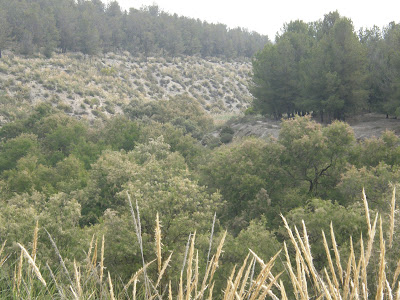
Los tarajes de la Dehesa en primavera.
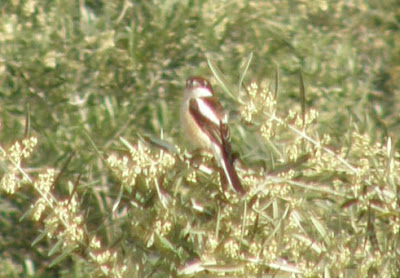
El Lanius senator sobre el olivo.
Un poco borroso, eso sí, pero estaba con el zoom al máximo, y ya de por sí era difícil encontrarlo entre las floridas ramas del árbol.

Una linda araña.
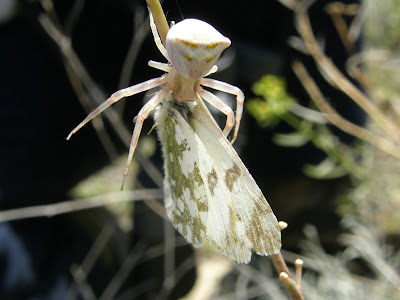
Comer o ser comido. La aventura de la vida.
Ya tocaba disfrutar un poco del campo. Y de ellos. Se os echa demasiado de menos, culebrillas :).
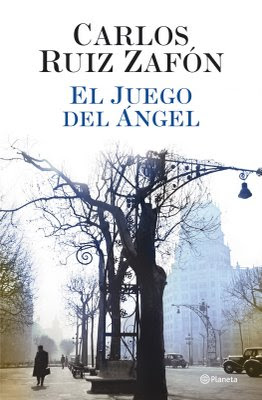
Profundamente decepcionado me ha dejado la lectura de El juego del ángel, la segunda “novela adulta” de Carlos Ruiz Zafón. Hace unos días, precisamente el Día del Libro de este año, comentaba cómo me había gustado en su momento La sombra del viento, anterior novela del autor catalán. Cuando leí La sombra del viento, sólo había oído hablar de ella por Círculo de Lectores, y la verdad es que simplemente se trataba de la prometedora novela de un autor poco conocido hasta aquel entonces, a menos que abundásemos en su producción para un público más juvenil (con El príncipe de la niebla o Marina, entre otras obras).
Siempre se dijo de las segundas partes que no fueron buenas, y aunque no se puede hablar de El juego del ángel como una continuación estricta de La sombra del viento, lo cierto es que se inscribe en el personal universo narrativo de Zafón, y en una Barcelona pretérita que nos resultará en extremo familiar a los lectores de su anterior novela. Algo me decía que el revuelo mediático que se cuajaba en torno al nuevo lanzamiento de Planeta no presagiaba nada bueno, pero me convencí a mí mismo ante la reticencia a adquirir el libro. “Que le guste a más gente, o que haya tantas personas esperando este libro tras el éxito mundial de La sombra del viento gracias al boca a boca de sus lectores, no tiene nada de malo. Y al fin y al cabo, han pasado siete años desde su publicación, tiempo más que suficiente para escribir un buen libro”. Craso error el mío. El juego del ángel es un libro de lectura fácil, adictivo aun sin llegar al extremo de La sombra del viento, bien escrito aunque tal vez excesivamente adjetivado (curioso que le propio Zafón critique esta forma de escribir en la propia novela), y que pierde fuerza por momentos, especialmente con un final insulso, casi un deus ex machina que desde mi punto de vista podría haber obviado.
Zafón intenta copiar la fórmula de los folletines de hace un par de siglos, pero con relativo éxito. Ciertamente no llega al nivel de Dickens, Hugo, Dumas o Balzac, y puede que ni tan siquiera lo pretenda, pero la sensación que queda es la de ineficacia a este respecto. Si a esto sumamos los variados errores ortográficos (como urgar, o Estanbul, pág. 421), alguna que otra errata (Escrité, pág. 181), y el cambio de nombre del protagonista en un momento de la novela (Daniel por David, pág. 61), se me antoja que Planeta ha pagado parte de la avalancha publicitaria a costa de reducir los gastos de un buen corrector. Y si tenemos en cuenta la poco menos que correcta encuadernación, mediante encolado y con las hojas sin coser, mejor no preguntarnos ahora qué ha ocurrido con los 24,50€ que nos acabamos de dejar en la librería.
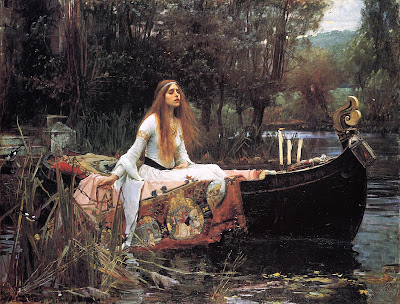
Una de las leyendas más hermosas del ciclo artúrico es el de la dama de Shalott, y lo es más si la oímos en la voz de Loreena McKennitt. En ella se narra cómo Elena, lady Shalott, teje encerrada en una torre, acompañada sólo por el eco de su voz. Pesa sobre ella una maldición, ya que se le ha prohibido contemplar la belleza de Camelot, y sólo puede ver la ciudad del lago a través de un espejo que le devuelve el reflejo de aquella mientras teje. Un día ve a Lancelot en el espejo, y su amor por él se convierte en su perdición, ya que olvidando la prohibición se vuelve y contempla Camelot. En ese momento todas las telas en las que tejía escenas de la vida en Camelot, de Arturo y de sus hombres, salen volando de la habitación. El espejo se rompe de parte a parte; ella baja al lago, toma una barca y parte en dirección a la mágica ciudad.
Este momento es el que refleja Waterhouse en el cuadro que acompaña al poema de Tennyson en la entrada de hoy, que es además la letra de la canción, de una abrumadora belleza, interpretada por Loreena McKennitt.
On either side the river lie
Long fields of barley and of rye,
That clothe the wold and meet the sky;
And through the field the road run by
To many-tower'd Camelot;
And up and down the people go,
Gazing where the lilies blow
Round an island there below,
The island of Shalott.
Willows whiten, aspens quiver,
Little breezes dusk and shiver
Through the wave that runs for ever
By the island in the river
Flowing down to Camelot.
Four grey walls, and four grey towers,
Overlook a space of flowers,
And the silent isle imbowers
The Lady of Shalott.
By the margin, willow veil'd,
Slide the heavy barges trail'd
By slow horses; and unhail'd
The shallop flitteth silken-sail'd
Skimming down to Camelot:
But who hath seen her wave her hand?
Or at the casement seen her stand?
Or is she known in all the land,
The Lady of Shalott?
Only reapers, reaping early,
In among the bearded barley
Hear a song that echoes cheerly
From the river winding clearly;
Down to tower'd Camelot;
And by the moon the reaper weary,
Piling sheaves in uplands airy,
Listening, whispers, " 'Tis the fairy
The Lady of Shalott."
There she weaves by night and day
A magic web with colours gay.
She has heard a whisper say,
A curse is on her if she stay
To look down to Camelot.
She knows not what the curse may be,
And so she weaveth steadily,
And little other care hath she,
The Lady of Shalott.
And moving through a mirror clear
That hangs before her all the year,
Shadows of the world appear.
There she sees the highway near
Winding down to Camelot;
There the river eddy whirls,
And there the surly village churls,
And the red cloaks of market girls
Pass onward from Shalott.
Sometimes a troop of damsels glad,
An abbot on an ambling pad,
Sometimes a curly shepherd lad,
Or long-hair'd page in crimson clad
Goes by to tower'd Camelot;
And sometimes through the mirror blue
The knights come riding two and two.
She hath no loyal Knight and true,
The Lady of Shalott.
But in her web she still delights
To weave the mirror's magic sights,
For often through the silent nights
A funeral, with plumes and lights
And music, went to Camelot;
Or when the Moon was overhead,
Came two young lovers lately wed.
"I am half sick of shadows," said
The Lady of Shalott.
A bow-shot from her bower-eaves,
He rode between the barley sheaves,
The sun came dazzling thro' the leaves,
And flamed upon the brazen greaves
Of bold Sir Lancelot.
A red-cross knight for ever kneel'd
To a lady in his shield,
That sparkled on the yellow field,
Beside remote Shalott.
The gemmy bridle glitter'd free,
Like to some branch of stars we see
Hung in the golden Galaxy.
The bridle bells rang merrily
As he rode down to Camelot:
And from his blazon'd baldric slung
A mighty silver bugle hung,
And as he rode his armor rung
Beside remote Shalott.
All in the blue unclouded weather
Thick-jewell'd shone the saddle-leather,
The helmet and the helmet-feather
Burn'd like one burning flame together,
As he rode down to Camelot.
As often thro' the purple night,
Below the starry clusters bright,
Some bearded meteor, burning bright,
Moves over still Shalott.
His broad clear brow in sunlight glow'd;
On burnish'd hooves his war-horse trode;
From underneath his helmet flow'd
His coal-black curls as on he rode,
As he rode down to Camelot.
From the bank and from the river
He flashed into the crystal mirror,
"Tirra lirra," by the river
Sang Sir Lancelot.
She left the web, she left the loom,
She made three paces through the room,
She saw the water-lily bloom,
She saw the helmet and the plume,
She look'd down to Camelot.
Out flew the web and floated wide;
The mirror crack'd from side to side;
"The curse is come upon me," cried
The Lady of Shalott.
In the stormy east-wind straining,
The pale yellow woods were waning,
The broad stream in his banks complaining.
Heavily the low sky raining
Over tower'd Camelot;
Down she came and found a boat
Beneath a willow left afloat,
And around about the prow she wrote
The Lady of Shalott.
And down the river's dim expanse
Like some bold seer in a trance,
Seeing all his own mischance --
With a glassy countenance
Did she look to Camelot.
And at the closing of the day
She loosed the chain, and down she lay;
The broad stream bore her far away,
The Lady of Shalott.
Lying, robed in snowy white
That loosely flew to left and right --
The leaves upon her falling light --
Thro' the noises of the night,
She floated down to Camelot:
And as the boat-head wound along
The willowy hills and fields among,
They heard her singing her last song,
The Lady of Shalott.
Heard a carol, mournful, holy,
Chanted loudly, chanted lowly,
Till her blood was frozen slowly,
And her eyes were darkened wholly,
Turn'd to tower'd Camelot.
For ere she reach'd upon the tide
The first house by the water-side,
Singing in her song she died,
The Lady of Shalott.
Under tower and balcony,
By garden-wall and gallery,
A gleaming shape she floated by,
Dead-pale between the houses high,
Silent into Camelot.
Out upon the wharfs they came,
Knight and Burgher, Lord and Dame,
And around the prow they read her name,
The Lady of Shalott.
Who is this? And what is here?
And in the lighted palace near
Died the sound of royal cheer;
And they crossed themselves for fear,
All the Knights at Camelot;
But Lancelot mused a little space
He said, "She has a lovely face;
God in his mercy lend her grace,
The Lady of Shalott."
But who hath seen her wave her hand?
Or at the casement seen her stand?
Or is she known in all the land,
The Lady of Shalott